



Different Types of Hearing Loss and Their Causes: A Complete Guide
According to the report published by the World Health Organization on 26 February 2025, by 2050 over 700 million people—or 1 in every 10 people—will have disabling hearing loss. Hearing loss is a common medical condition affecting millions of people worldwide. It is caused by various factors and can be present at the time of…
Causes of Unilateral Tinnitus Without Hearing Loss: What’s Behind the Ringing?
Unilateral tinnitus is a medical condition in which a person hears sounds like ringing, roaring, buzzing, or whistling only in one ear. It is mainly caused by a buildup of earwax, prolonged exposure to loud noise, medications, and underlying disease. If someone hears the noises in both ears, it is called bilateral tinnitus.
Can Tinnitus Cause Permanent Hearing Loss? What Science Says
Tinnitus is a common auditory problem where a person experiences persistent ringing, buzzing, or hissing sounds in the ears. In clinical terms, it is a symptom that is caused by an underlying health condition. For example, it is associated with hearing loss, exposure to loud noises, ear infections, Meniere’s disease, and much more.
Can Tinnitus Cause Hearing Loss? Separating Myths from Facts
Facebook-f Instagram Linkedin Youtube Tinnitus is a condition when you hear noises like ringing or buzzing in your ear, even in silence environment. According to the World Health Organization, around 16 million people seek medical attention for tinnitus annually. At present, there is a lot of misinformation about tinnitus, and it’s very important to separate…
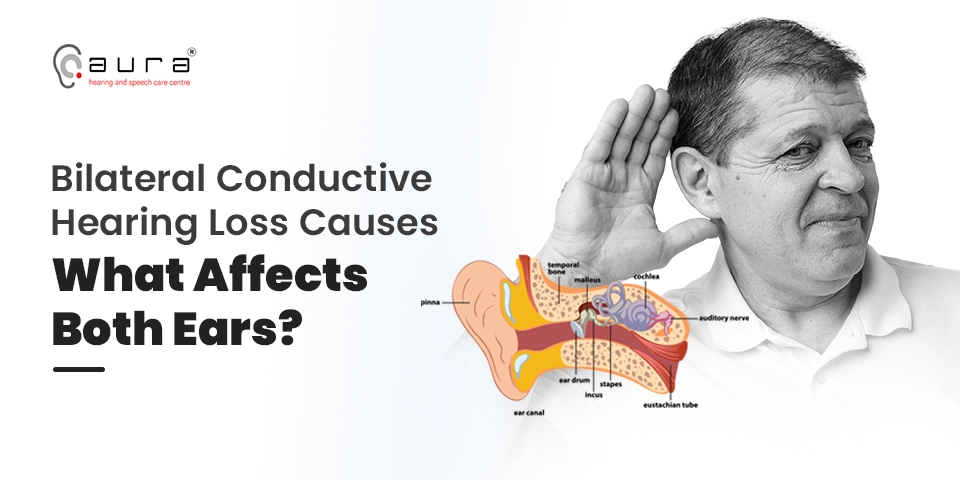
Bilateral Conductive Hearing Loss Causes: What Affects Both Ears?
Facebook-f Instagram Linkedin Youtube Conductive hearing loss occurs when something blocks sound from getting to your inner ear. It can be momentary or permanent, depending on the cause. However, in most cases, it is treatable and can be managed with medication and hearing devices. Conductive hearing loss is classified into bilateral and unilateral conductive hearing…
Most Common Cause of Conductive Hearing Loss: What You Need to Know
Facebook-f Instagram Linkedin Youtube Most Common Cause of Conductive Hearing Loss: What You Need to Know Hearing impairment is one of the most common problems affecting people worldwide. As per the recent report published by the World Health Organization in February 2025, by 2050, around 2.5 billion people are anticipated to face some degree of…
Congenital Hearing Loss: Causes, Symptoms, Diagnosis & Treatment
Facebook-f Instagram Linkedin Youtube Congenital hearing loss is one of the most common birth defect abnormalities, and it is mostly associated with the genetic disorder. It is caused by a defect in genes that affect the development of the hearing organs. However, other factors like birth complications, infections, and the consumption of drugs and alcohol…
Sensorineural Hearing Loss: Causes, Symptoms, and Treatment Options
Facebook-f Instagram Linkedin Youtube Sensorineural Hearing Loss: Causes, Symptoms, and Treatment Options Hearing plays a vital role in how we connect with others, perform confidently at work, and enjoy everyday moments. When conversations begin to sound unclear, voices feel muffled, or background noise becomes overwhelming, it can be unsettling. These changes often develop gradually, making…

Month: April 2025
Archive
Categorise
- Is It Too Hard? The Easy, Stress-Free Guide on How to Use Hearing Aid Machine for Beginners

- Tired of Muffled Sound? Here’s How to Clean Signia Hearing Aids the Right Way
- How to Clean Phonak Hearing Aids: Safe & Simple Step-by-Step Guide
- Unitron Hearing Aid Price in India (2026 Guide): Flexible Cost, Smart Upgrades & Long-Term Savings
- Invisible Hearing Aids Price in India: Is the Effortless Look Worth the Cost?