As parents, we’re always watching our children—celebrating their first words, cheering on milestones, and making sure they grow up happy and healthy. But there’s one important area we may not always think to check: their hearing.
Even if your child appears to respond well to sound, hearing loss isn’t always obvious. It can be subtle, temporary, or only show up in certain situations like noisy classrooms or group conversations. And when hearing challenges go unnoticed, they can quietly impact your child’s speech, learning, and social development.
So, why might your child need a hearing test—even if everything seems fine? Let’s understand.
Hearing Loss Isn’t Always Easy to Identify
Children are highly adaptive. If they’ve never heard sounds clearly, they may not realize something is missing. Instead of saying, “I can’t hear well,” they might mispronounce words, have trouble paying attention, or avoid speaking in a crowd.
According to health data, more than 1000 children are born with or develop hearing issues each year—and many go undiagnosed for far too long.
What You Might Miss Without Realizing
Here are a few behaviors that can sometimes point to hearing difficulties, even if they’re not obvious:
- Delayed speech or unclear words
- Frequently asking “What?” or “Huh?”
- Increasing the volume of the TV or device more than usual
- Trouble following instructions in noisy environments
Early Testing Makes a Big Difference
Hearing is directly connected to how a child learns to speak, read, and socialize. Even a mild hearing issue can make it harder to pick up on sounds, words, and tone—especially in busy or noisy settings.
If undetected, hearing loss can affect
- Language skills—Poor hearing can delay or change speech.
- School performance—Missing parts of conversations or lessons can lead to confusion and difficulty keeping up.
- Social skills—Mishearing friends can make it hard to join in on play or conversations, affecting confidence.
- Emotional health—Feeling left out or misunderstood can lead to anxiety or behavioral challenges.
Many Causes Are Treatable
Not all hearing loss is permanent. Children often experience temporary hearing issues caused by:
- Ear infections
- Fluid in the middle ear
- Excess earwax
- Allergies or colds
When Should Your Child Get Tested?
You don’t need to wait for a problem to arise. Hearing tests can be part of your child’s overall health care routine. Here’s a general guide:
- At birth—Newborns are typically screened in the hospital.
- Before starting school—a great time to check in
- If speech seems delayed or unclear
- If learning, focus, or behavior suddenly change
- After repeated ear infections or illness
Testing Is Easy, Safe, and Child-Friendly
At Aura Hearing Care, we make the hearing test experience comfortable for children. Based on your child’s age, our audiologists may use
- Play-based tests that turn listening into a game
- Headphone listening tasks for older kids
- Ear response checks that need no response from the child
- Middle ear pressure tests to check for infection
What If a Problem Is Found?
First, take a deep breath. Early testing means early help. If a hearing issue is found, we’ll guide you through the options, which might include:
- Medical treatment for infections or blockages
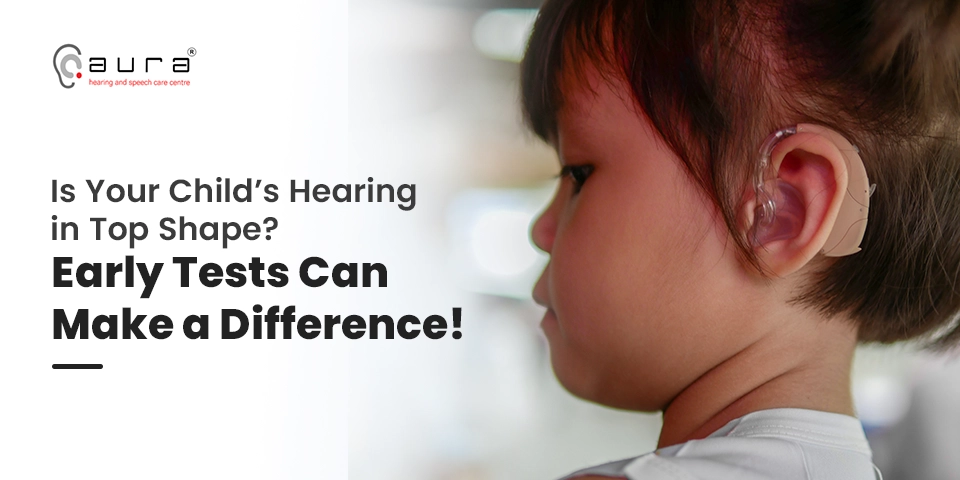
- Hearing aids (small and comfortable—even for toddlers!)
- Speech or developmental therapy
- School accommodations
Because Every Sound Matters
From giggles to bedtime stories, from classroom lessons to whispered secrets—your child’s world is full of sounds that shape their development and joy. A hearing test isn’t just a medical check—it’s a step toward giving your child the best tools to thrive.
Schedule Your Child’s Hearing Screening Today
At Aura Hearing Care, we make hearing health simple, safe, and supportive.
Your child’s laughter, learning, and language all begin with clear hearing. Let’s make sure nothing gets missed.
Book now and give your child the gift of confident communication.