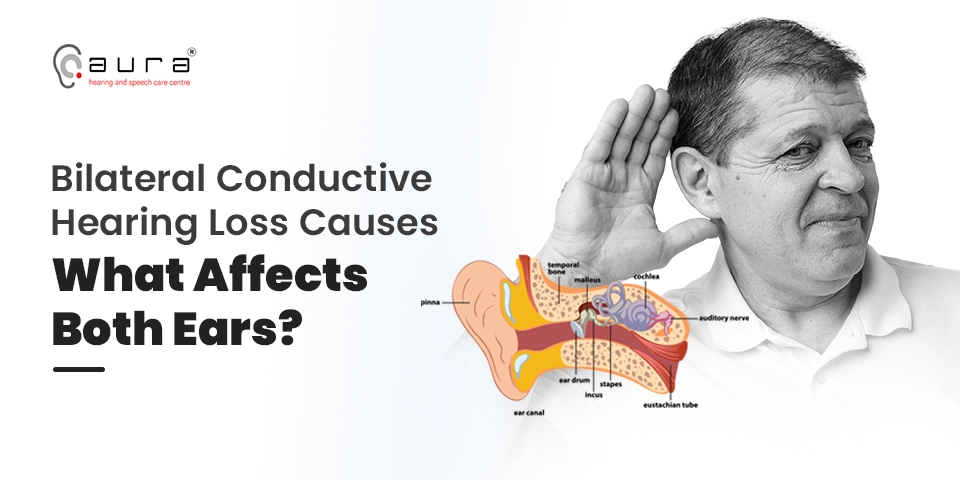
Conductive hearing loss occurs when something blocks sound from getting to your inner ear. It can be momentary or permanent, depending on the cause. However, in most cases, it is treatable and can be managed with medication and hearing devices. Conductive hearing loss is classified into bilateral and unilateral conductive hearing loss. When hearing loss affects both ears, it is called bilateral conductive hearing loss. It can range from mild to severe and affect both ears. Unlike unilateral hearing loss, which impacts only one ear, bilateral hearing loss affects both ears, significantly affecting the quality of life.
In this blog, we will discuss bilateral conductive hearing loss, its causes, symptoms, treatment, and precautions to prevent this condition.
Causes of Bilateral Hearing Loss?
Some of the factors that cause bilateral hearing loss are:
1- Aging
Aging is one of the most common causes of bilateral hearing loss due to degeneration of the auditory nerve.
2- Genetics
Certain affected genes can lead to hearing loss even in children. This needs to be ruled out at the earliest.
3- Infections
Some severe ear infections can also cause hearing impairment in both ears.
4- Medications
Medicine like ototoxic (chemotherapy medicine) and a few antibiotics can damage both the ear, leading to hearing loss.
5- Birth Complication
In some cases, bilateral hearing loss is congenital, which is caused by factors like complications during birth, consumption of drugs during pregnancy, and other complications.
Type Of Bilateral Hearing Loss:
- Bilateral Sensorineural Hearing Loss:
Happens due to damage to the inner ear or the auditory nerve. Common causes of this condition are aging, exposure to noise, and genetic factors.
- Bilateral Conductive Hearing Loss:
This type occurs due to the problems in the outer or middle ear that prevent sound waves from reaching the inner ear. It is caused by a buildup of earwax, fluid, and growth of extra bone in the middle ear.
- Mixed Hearing Loss:
This type of hearing loss includes a combination of both sensorineural and conductive hearing loss affecting both ears.
Symptoms of Bilateral Hearing Loss?
This condition can occur over time or suddenly, depending on the cause. So, identifying the symptoms of this condition is critical. Some of the major signs and symptoms include:
Impaired Speech: Difficulty processing and understanding speech signals when presented with background auditory stimuli.
Repetitive Requests for Speech Clarification: Frequent need for speakers to repeat statements due to misunderstanding in speech.
Need for an increase in volume: Necessity to increase the volume of audio output from electronic devices to get adequate audibility.
Tinnitus: You might hear ringing, buzzing, hissing, etc., in your ear.
Difficulty Locating Sounds: difficulty in identifying where the sound is coming from.
Diagnostic of Bilateral Hearing Loss:
- Physical Examination:
- A visual inspection of the outer ear and ear canal to determine obstructions (e.g., earwax) or structural abnormalities.
- Hearing Tests:
- Audiogram:
- A comprehensive test that measures hearing sensitivity at various frequencies to identify the type and severity of hearing loss.
- Speech Audiometry:
- Assessment of the patient’s ability to understand spoken words and understand speech discrimination and recognition.
- Imaging Tests:
- Magnetic Resonance Imaging (MRI) or Computed Tomography (CT) Scans:
- These tests are performed to identify the structural abnormalities, tumors, or other underlying medical conditions.
Bilateral Hearing Loss Treatment Options:
- Hearing Aids:
These devices amplify sound, making it easier to hear.
Aura Hearing Care offers a range of advanced hearing aids, including:
- Receiver In Canal (RIC): The device is compact and hidden, good for people new to hearing aids.
- Completely in the Canal (CIC): It is designed to fit completely inside your ear canal.
- Invisible in Canal (IIC): This is a minimal device, almost totally hidden, with just a tiny part to help take it out.
- In the Canal (ITC): Fits partly in the ear canal, with a small portion showing.
- In the Ear (ITE): This is a personalized hearing aid, designed to fit the outer ear for comfort.
- Behind the Ear (BTE): This device is the most used type and is available in different sizes.
- Cochlear Implants:
- These are electronic devices surgically implanted to stimulate the auditory nerve.
- They are typically recommended for individuals with severe to profound sensorineural hearing loss.
- Medical or Surgical Intervention:
- For conductive hearing loss, treatment focuses on addressing the underlying cause.
- This may involve:
- Medications to treat infections.
- Surgical procedures to correct structural abnormalities (e.g., removing earwax, repairing the eardrum, or treating otosclerosis).
- Assistive Listening Devices (ALDs):
- These devices enhance hearing in specific situations.
- Examples include:
- FM systems (wireless systems that transmit sound directly to a hearing aid or cochlear implant).
- Amplified telephones.
- Alerting systems.
- Speech Therapy:
- This is particularly important for children with bilateral hearing loss.
- It helps them develop language and communication skills.
How to Prevent Bilateral Hearing Loss Treatment:
1- Get Regular Ear Checkups—schedule your hearing checked regularly.
2- Avoid Ototoxic Medications- Ask your doctor about medicine that might affect your hearing.
3- Maintain Good Ear Hygiene: Clean the outside of your ears gently, and don’t put things inside your ear.
4- Vaccinations: Get your shots to stop disease that can damage your ears.
Conclusion:
In conclusion, bilateral hearing loss, affecting both ears, can significantly impact quality of life. Understanding the distinctions between sensorineural, conductive, and mixed hearing loss is important for proper diagnosis and treatment. Early detection through regular hearing checkups and use of hearing aids, cochlear implants, or medical treatments can significantly improve communication and overall well-being. Furthermore, practicing preventative measures, such as protecting your ears from loud noises and maintaining good ear hygiene, is crucial for protecting your hearing health throughout your life.
Want to hear better? Aura Hearing Aid can help you find the right solution. Book your visit today!