

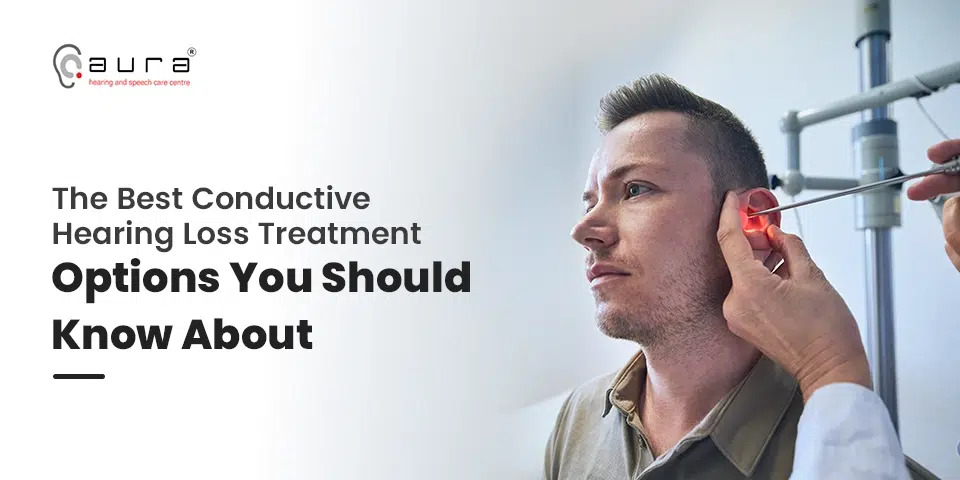
Hearing loss can occur for many reasons, and one of the most common types is conductive hearing loss. Unlike sensorineural hearing loss, which involves damage to the inner ear or auditory nerve, this condition is caused by problems in the outer or middle ear, preventing sound from being properly conducted to the inner ear. This type of hearing loss can result from a variety of issues, such as ear infections, earwax buildup, eardrum damage, or fluid in the ear.
Fortunately, conductive hearing loss is often treatable with the right approach. In this blog, we’ll discuss the top treatment options for this condition, including both medical and non-surgical solutions. By providing insights into Conductive Hearing Loss Treatment methods, we will help individuals improve their quality of life and demonstrate how hearing aids can play a crucial role in the management of this condition.
What is Conductive Hearing Loss?
Conductive hearing loss occurs when sound waves are unable to reach the inner ear. This can happen due to issues in the outer ear, eardrum, or middle ear (the area that includes the ossicles, or tiny bones that transmit sound).
Common causes of conductive hearing loss include:
- Earwax buildup
- Fluid in the ear (often due to ear infections or colds)
- Perforated eardrum
- Middle ear infections (otitis media)
- Otosclerosis (abnormal bone growth in the middle ear)
- Eustachian tube dysfunction
Unlike sensorineural hearing loss, which is permanent, conductive hearing loss can often be corrected with the proper treatment.
Related: Different Types of Hearing Loss and Their Causes
Top Treatment Options for Conductive Hearing Loss
1. Earwax Removal
One of the most common causes of conductive hearing loss is earwax buildup. When earwax accumulates in the ear canal, it can block the passage of sound. Thankfully, this issue is easily treatable.
Earwax removal can be done by:
- Using over-the-counter ear drops that soften the wax
- Ear irrigation with warm water or saline solution
- Professional cleaning by an audiologist or healthcare provider
Removing the wax restores the normal flow of sound, significantly improving hearing.
2. Medical Treatment for Ear Infections
If conductive hearing loss is caused by an ear infection, treatment typically involves:
- Antibiotics (for bacterial infections)
- Steroid ear drops (for inflammation or fluid)
- Pain relief to manage discomfort
In cases of chronic or recurrent ear infections, an audiologist may recommend additional treatments, such as a myringotomy (surgical procedure to drain fluid) or placing a ventilation tube in the eardrum to prevent further fluid buildup.
3. Eardrum Repair Surgery
A perforated eardrum (a hole in the eardrum) can lead to conductive hearing loss, especially if the hole is large. In some cases, the eardrum may heal on its own, but if it doesn’t, surgery may be required.
Tympanoplasty, or eardrum repair surgery, can restore the eardrum's integrity and improve hearing by allowing sound waves to pass through the ear more effectively.
4. Hearing Aids for Conductive Hearing Loss
For many individuals with conductive hearing loss, hearing aids are a highly effective solution. Hearing aids can amplify sound, bypassing the issue in the outer or middle ear, and sending the sound directly to the inner ear. Some key benefits of using hearing aids for conductive hearing loss include:
- Better sound amplification for those with mild to moderate hearing loss
- Customizable settings for different environments
- Bluetooth connectivity for easy pairing with smartphones, TVs, and more
- Small and discreet designs for comfort and convenience
If you’re considering hearing aids, book your free appointment at Aura Hearing Care today to help you choose the best model for your needs.
5. Surgical Treatment for Otosclerosis
Otosclerosis is a condition where abnormal bone growth in the middle ear affects the movement of the ossicles, the small bones that transmit sound. In severe cases, surgery may be necessary to improve hearing.
A common surgical procedure for otosclerosis is a stapedectomy, which involves removing the affected bone and replacing it with a prosthesis. This surgery can restore hearing in most cases of conductive hearing loss caused by otosclerosis.
6. Eustachian Tube Dysfunction Treatment
The Eustachian tube helps equalize pressure in the ear. If this tube becomes blocked or does not function properly, it can cause fluid buildup in the middle ear, leading to conductive hearing loss.
Treatment options for Eustachian tube dysfunction include:
- Decongestants to reduce fluid buildup
- Nasal corticosteroid sprays to reduce inflammation
- Autoinflation (blowing air through the nose to open the tube)
If the problem persists, surgical options may be considered.
When Should You Seek Medical Help for Conductive Hearing Loss?
It’s important to consult an audiologist or healthcare provider if you notice:
- Muffled hearing or a sense of fullness in the ear
- Ear pain, drainage, or discomfort
- A history of ear infections or frequent colds
- Dizziness or a loss of balance
An early diagnosis and appropriate treatment can help prevent long-term damage and improve quality of life.
Why Choose Aura Hearing Care for Conductive Hearing Loss Treatment?
✔️ Trusted Brands
We offer hearing aids from renowned brands like Signia, Phonak, Resound, and more.
✔️ Affordable & Transparent Pricing
Enjoy free consultation, audiometry, trial, and battery supply—with no hidden costs.
✔️ Lifetime Aftercare
Get free lifetime check-ups and servicing to ensure your hearing aids stay in top shape.
✔️ Spare Instruments
We provide spare hearing aids during emergencies to ensure uninterrupted service.
✔️ Advanced Technology
Our hearing aids come with Bluetooth, waterproof models, and surround sound processors.
✔️ Accurate Assessments
Using digital audiometers and video otoscopes, we ensure precise hearing evaluations
Book Your Free Consultation Now! Ready to experience the benefits of Aura Hearing Care? Schedule a consultation today and our audiologists will guide you toward the best treatment for your hearing needs.
Also Read: What to Expect When You Purchase Hearing Aids: A Step-by-Step Guide
Conclusion
If you or a loved one is experiencing conductive hearing loss, early diagnosis and treatment are essential. Whether it's through hearing aids, medical treatment, or surgery, there are numerous options available to help restore hearing.
At Aura Hearing Care, we offer professional guidance and support to help you choose the best treatment plan. Our experienced audiologists are here to help you every step of the way.
Book your free consultation today and take the first step towards better hearing.
Recent Posts



Contact Us
- +91 93245 98192
- info@aurahearingaid.com
FAQ’s
How Can I Recover from Conductive Hearing Loss?
Recovery from this condition often depends on the underlying cause. If it’s due to earwax buildup, it can be easily removed by ear drops or professional cleaning. For ear infections, medications or antibiotics may be used. In more severe cases, surgery or the use of hearing aids can help improve hearing.
Is Conductive Hearing Loss Temporary?
Yes, this condition can be temporary if it’s caused by conditions like ear infections, fluid buildup, or earwax impaction. In these cases, once the underlying issue is addressed, hearing can often return to normal. However, in more severe cases, it may require surgical intervention.
How Can I Stop Hearing Loss?
Preventing hearing loss involves protecting your ears from loud noises, managing ear infections, and avoiding inserting foreign objects into the ear canal. Regular hearing check-ups and early treatment for issues like earwax buildup and fluid in the ears can help stop or minimize hearing loss.
What Are the 5 Levels of Hearing Loss?
The five levels of hearing loss are:
- Normal hearing: Hearing thresholds of 0-20 dB
- Mild hearing loss: 21-40 dB
- Moderate hearing loss: 41-60 dB
- Severe hearing loss: 61-80 dB
- Profound hearing loss: 81+ dB
Each level requires different treatment approaches, such as hearing aids for mild to moderate loss, and cochlear implants for profound hearing loss.