
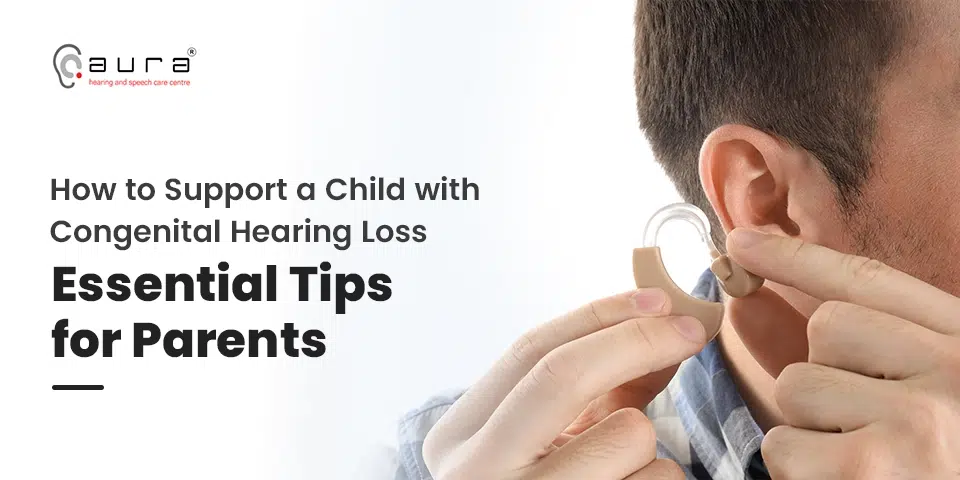
How to Support a Child with Congenital Hearing Loss: Essential Tips for Parents
When a child is diagnosed with congenital hearing loss, it can be overwhelming for parents and caregivers. This condition refers to hearing loss present at birth, and it can vary from mild to profound. Early identification and intervention are crucial for minimizing the impact on a child’s development and ensuring they receive the proper support and treatment. In this blog, we’ll explore how parents can support a child with congenital hearing loss, the importance of early detection, and how hearing aids and other interventions can help.
What is Congenital Hearing Loss?
Congenital hearing loss refers to hearing impairment that is present at birth. It can be caused by a variety of factors, including:
- Genetic factors: Some babies are born with hearing loss due to inherited genes.
- Infections during pregnancy: Infections like rubella or cytomegalovirus (CMV) can affect the baby’s hearing.
- Prematurity: Babies born prematurely are at a higher risk of hearing loss.
- Birth complications: Certain complications during childbirth can lead to hearing impairment.
- Syndromes: Certain syndromes, like Usher syndrome, are associated with congenital hearing loss.
Congenital hearing loss can be detected early through newborn hearing screening tests, allowing for timely intervention and treatment.
Why Early Detection of Hearing Loss is Crucial?
The earlier congenital hearing loss is detected, the better the chances are for minimizing its effects on a child’s language, speech, and social development. Early hearing tests are essential because they help:
- Identify hearing loss in newborns: Universal newborn hearing screening is now a standard practice in many countries. This test can identify hearing issues within the first few days of life, allowing for early intervention.
- Facilitate early interventions: Early treatment options, such as the use of hearing aids, speech therapy, and sign language, can help children develop communication skills.
- Ensure proper growth and development: Language and speech development are closely tied to hearing. Early interventions help prevent delays in these areas, supporting healthy social, cognitive, and emotional growth.
Schedule a free appointment at Aura Hearing Care to get a comprehensive hearing check-up for your child.
Treatment Options for Children with Congenital Hearing Loss
Once congenital hearing loss is diagnosed, there are several treatment options available to support the child’s hearing needs. Depending on the severity of the hearing loss, the following options can help:
1. Hearing Aids for Children
Hearing aids are one of the most common treatments for children with congenital hearing loss. These devices amplify sound and make it easier for children to hear. There are different types of hearing aids available, including behind-the-ear (BTE) and in-the-ear (ITE) models. Latest technology in hearing aids that are suitable for children, include:
- Tiny, lightweight models
- Bluetooth-enabled devices
- Waterproof designs
- Powerful hearing aids for severe hearing loss
2. Cochlear Implants
For children with severe to profound hearing loss who do not benefit from hearing aids, a cochlear implant might be recommended. This device bypasses the damaged portion of the ear and directly stimulates the auditory nerve, helping the child hear sounds.
3. Speech Therapy
Children with congenital hearing loss may require speech therapy to help them develop language and communication skills. This therapy is particularly important for children who experience severe hearing loss and cannot benefit fully from hearing aids or implants.
4. Sign Language and Communication Support
Some children with hearing loss may benefit from learning sign language. This makes it easier for them to communicate their feelings and express themselves.
How to Support Your Child with Congenital Hearing Loss
As a parent or caregiver, it’s crucial to provide emotional and practical support for your child’s hearing journey. Here are some essential tips for supporting a child with congenital hearing loss:
1. Be Informed
The more you understand about congenital hearing loss, the better you can support your child. Stay informed about hearing aids, hearing tests, and the resources available to you. Attend all hearing-related appointments and ask questions to ensure you understand the best ways to help your child.
2. Encourage Early Communication
Start talking, signing, or using any available method to communicate with your child from day one. The earlier you start using sign language or spoken language, the better your child’s language development will be.
3. Consistent Use of Hearing Aids or Implants
If your child uses hearing aids or cochlear implants, make sure they wear them consistently. Regular use ensures your child gets the most benefit, improving their ability to hear and communicate effectively.
4. Foster a Supportive Environment
Encourage your child to participate in activities that stimulate hearing and communication. Create a supportive home environment by talking or signing to your child, reading together, and engaging in other activities that enhance their language skills.
5. Stay Connected with Support Networks
It’s important for parents of children with hearing loss to connect with other families and professionals who understand the challenges and opportunities involved. Joining support groups can provide valuable advice, emotional support, and a sense of community.
Why Choose Aura Hearing Care for Pediatric Hearing Solutions?
At Aura Hearing Care, we understand the unique needs of children with congenital hearing loss, and we’re dedicated to providing them with the highest quality hearing solutions. Here’s why families trust us to provide comprehensive, personalized care:
1. Multi-Brand Expertise
We are proud to be an authorized dealer for renowned hearing aid brands such as Signia, Phonak, ReSound, Widex, Unitron, and Beltone. By offering a wide selection of models from these leading manufacturers, we ensure your child receives the most appropriate hearing aid for their specific hearing needs.
2. No Hidden Costs
At Aura, we believe in full pricing transparency. When you purchase bilateral digital hearing aids, we include:
- Free consultation
- Free hearing aid trial
- Free audiometry
- Free fitting and fine-tuning
- Free battery supply for the first three months
3. Free Lifetime Aftercare Service
Just as your child’s hearing develops, we are committed to providing ongoing support. We offer free hearing check-ups and hearing aid servicing throughout your child’s growth, ensuring their hearing aids remain in optimal condition.
4. Spare Instrument Service
In case of any breakdowns or servicing requirements, we offer a spare instrument so your child’s hearing experience remains uninterrupted. We are dedicated to ensuring that your child’s hearing needs are always met, even in emergencies.
5. Cutting-Edge Hearing Aid Technology
We provide the latest advancements in hearing aid technology, including:
- The smallest hearing aids for a comfortable fit
- 100% invisible designs for maximum discretion
- Bluetooth-enabled devices to integrate seamlessly with your child’s modern communication needs
6. Advanced Hearing Checkup Technology
Our clinics are equipped with digital audiometers, video otoscopes, and computerized audiometry to ensure the most accurate and reliable hearing assessments for your child, tailored to their unique requirements.
7. Sound-Treated Booths for Accurate Testing
To guarantee the highest accuracy in hearing tests, we use sound-treated booths that eliminate background noise, providing the best possible environment for testing and assessments.
Book a Free Consultation Today! At Aura Hearing Care, we are dedicated to helping your child achieve the best hearing experience possible. Schedule a free consultation and let us guide you toward the perfect hearing solution for your child.
Conclusion:
If your child has been diagnosed with congenital hearing loss, early intervention is key to their development and well-being. With the right hearing aids, speech therapy, and emotional support, children with congenital hearing loss can lead fulfilling, communicative lives.
At Aura Hearing Care, we’re here to provide personalized hearing solutions and ongoing support for your child’s hearing health. Our team of expert audiologists is dedicated to helping your child hear and thrive.
Book your appointment today and take the first step towards a better hearing future for your child.
Recent Posts



Contact Us
- +91 93245 98192
- info@aurahearingaid.com
FAQ’s
Q1. How to Know If a Baby is Deaf?
Signs of deafness in babies include:
- Lack of response to sounds
- Not turning towards voices or noises by 6 months of age
- No babbling or vocalization by 9 months
- Limited or no reaction to loud noises
If you notice any of these signs, it’s important to get a hearing test from a healthcare professional or audiologist.
Q2. Is Congenital Hearing Loss Genetic?
Yes, congenital hearing loss is often genetic, caused by mutations in specific genes that affect hearing. In some cases, the hearing loss may be part of a genetic syndrome, while in other cases, it can occur without other health issues. A genetic test can help determine the cause.
Q3. Is Congenital Deafness Permanent?
Yes, congenital deafness is usually permanent, especially when it involves sensorineural hearing loss. However, with early diagnosis and appropriate treatment like hearing aids or cochlear implants, children with congenital deafness can still develop communication skills and lead fulfilling lives.
Q4. At What Age Does Hearing Loss Start?
Hearing loss can begin at any age, but congenital hearing loss is present at birth. It is often detected in the early stages through newborn hearing screenings. For other types of hearing loss, it can begin gradually during childhood or later in life, typically as a result of age, noise exposure, or medical conditions.