
Contact Us
aura.wecare@gmail.com
+91 93244 54132

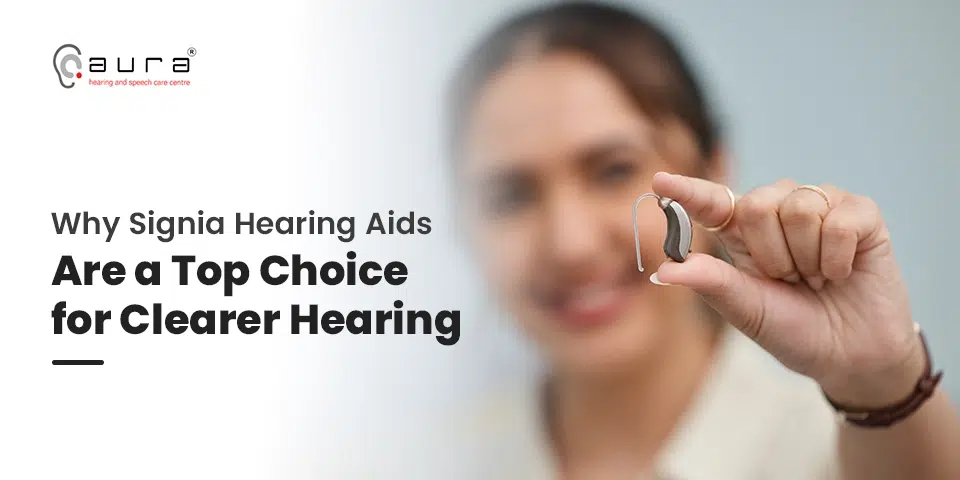
People who have hearing loss are sometimes not aware of it. Hearing loss usually develops gradually – so gradually that you don’t notice the loss of these subtle everyday sounds. Before you know it, you could start missing the important sounds in your everyday life, such as the voices of loved ones.
Evaluate your hearing by taking a hearing loss self-test.

Hearing aids can significantly improve the user’s communication and can return the hearing impaired to a full and active lifestyle. With hearing aids most people can hear their family and friends more easily and enjoy being in group conversations without asking people to repeat themselves all the time. They can watch TV at a normal volume, hear the warning signals and hear more easily in phone conversations.
Hearing aids improves the quality of life in most cases and reduces the negative impact of hearing loss. On the other hand, the quality of life suffers when hearing impairment is left untreated.
An American study found that people with hearing problems who did not wear hearing aids were more likely to report sadness and depression, anxiety, paranoia, emotional problems, insecurity and reduced social activities. This study also found that people who started wearing hearing aids reported significant improvements in their quality of life.
Those whose hearing loss was treated by hearing aids reported the following benefits:
Another benefit of wearing hearing aids is preserving the quality of your hearing and reducing the risk of auditory deprivation. As a result of a continued lack of sound stimulation, auditory deprivation, the brain gradually loses some of its ability to process information including speech.Auditory deprivation most often occurs when the ear goes unaided over a long period of time – so the earlier you consider wearing hearing aids, the better your chances are of minimizing this risk. So, the idea of “use it or lose it” truly does apply to hearing.
aura.wecare@gmail.com
+91 93244 54132
Answer: Hearing loss can be categorized into three main types:
Answer: Currently, sensorineural hearing loss, caused by damage to the inner ear or auditory nerve, cannot be reversed. However, it can be managed effectively with hearing aids, cochlear implants, and assistive listening devices. Conductive hearing loss, on the other hand, is often treatable through medical or surgical interventions.
Answer: Some common signs of hearing loss include:
If you notice any of these symptoms, it’s recommended to get a hearing test from a professional audiologist.
Answer: It’s advisable to start regular hearing tests at the age of 60. However, if you have been exposed to loud noises, have a family history of hearing loss, or experience any of the signs mentioned above, you should schedule a hearing test earlier. For children, early screenings are essential to ensure proper hearing development.
Answer: Hearing aids amplify sound to compensate for hearing loss. The device captures sound through a microphone, amplifies it, and sends it to the ear. The processed sound is then transmitted to the ear canal, making it easier for the wearer to hear. Different models offer features such as noise reduction, speech enhancement, and connectivity with smartphones for added convenience.
Answer: Many health insurance plans offer partial or full coverage for hearing aids. However, coverage varies depending on your provider and plan. It’s best to check with your insurance company or consult your audiologist for information on coverage options and available financing plans.
Answer: Yes, hearing aids can be used for both ears. In fact, using hearing aids in both ears, known as binaural hearing aids, is generally recommended as it helps with sound localization, better speech understanding, and improved overall hearing experience.
Answer: On average, hearing aids last between 3 to 7 years, depending on the model, usage, and care. Regular maintenance, such as cleaning and battery replacement, can help extend the life of the device.
Answer: Yes, hearing aids can help with tinnitus. Many hearing aids have a tinnitus masking feature that produces a soft sound to help distract from the ringing or buzzing in the ears. This feature can provide relief for many people suffering from tinnitus.
Answer: Choosing the right hearing aid depends on several factors, including:
Answer: Yes, most modern hearing aids allow users to adjust the volume to suit their needs. Some models also come with automatic volume control, which adjusts the volume based on the surrounding noise levels. Many hearing aids can be connected to smartphones or remote controls for easier adjustments.
Answer: Hearing aids are generally safe to use and do not pose significant risks. However, improper use or poor maintenance (e.g., not cleaning the device regularly) can cause discomfort or lead to infections in the ear. It’s essential to follow the instructions provided by your audiologist and regularly clean your hearing aids for optimal performance.
Answer: To maintain your hearing aids:
Schedule periodic check-ups with your audiologist to ensure they are working correctly.
WhatsApp us